If you’ve spent any time sourcing wire for industrial, agricultural, or construction applications, you’ve probably come across the term low carbon galvanized wire more times than you can count. And yet, it’s surprising how many procurement teams place orders without fully understanding what separates a quality product from a substandard one — or what separates a reliable supplier from one that will cost you rework, delays, and wasted budget.
This article is for engineers, purchasing managers, and project leads who want to make smarter decisions when sourcing low carbon galvanized wire — whether they’re buying for the first time or reevaluating their current supply chain.
What Makes Wire “Low Carbon”?
The term refers to the carbon content of the steel. Low carbon steel wire typically contains up to 0.30% carbon by weight. That relatively modest carbon content is what gives this type of wire its defining characteristics: it’s ductile, easy to bend and form, and workable without cracking or snapping under stress.
Compare this to high carbon wire, which is harder, stronger in tension, and more brittle — better suited for springs, ropes, and applications where rigidity is the priority. Low carbon wire is the opposite: it bends, ties, and weaves without complaint, making it the go-to choice for general-purpose industrial and construction use.
When that low carbon steel is drawn into wire form and then coated with zinc — either through hot-dip galvanizing or electro-galvanizing — you get low carbon galvanized wire: a product that’s both workable and corrosion-resistant.
Hot-Dip vs. Electro-Galvanized: Which Should You Specify?
This is one of the most important decisions you’ll make when sourcing low carbon galvanized wire, and it’s worth understanding the difference properly.
Hot-dip galvanizing involves passing the wire through a bath of molten zinc at temperatures around 450°C. The zinc bonds metallurgically with the steel, creating a thick, durable coating that holds up well outdoors, in humid environments, and in applications where the wire will be exposed to abrasion or physical wear. This is the preferred method for construction, agricultural fencing, and any application involving extended outdoor exposure.
Electro-galvanizing uses an electric current to deposit a thin, even layer of zinc onto the wire surface. The coating is smoother and more uniform, which makes it suitable for applications where appearance matters — but it’s thinner and less resistant to corrosion over time. If your application involves a controlled indoor environment or cosmetic requirements (like powder coating afterward), electro-galvanized wire makes sense. If it’s going outside, hot-dip is the standard.
A quality supplier will ask you about your end application before recommending a galvanizing method. If they don’t ask, that’s a red flag worth noting.
Coating Weight: The Spec That Buyers Often Overlook
Zinc coating weight is measured in grams per square meter (g/m²) and is one of the most critical quality parameters for galvanized wire. Most standards — including ASTM A641 and equivalent international specifications — define multiple coating classes:
- Class 1 offers a moderate zinc coating suitable for general indoor and light outdoor use.
- Class 3 provides a heavier zinc coating for demanding outdoor or corrosive environments.
In practice, buyers often focus on wire diameter and tensile strength while overlooking coating weight. That’s a mistake. Two wires with identical diameters and the same steel grade will perform very differently in a corrosive environment if their zinc coating weights differ significantly.
When requesting quotes, always specify the coating class or minimum zinc weight (in g/m²) alongside the wire diameter. A supplier worth working with will be able to confirm their coating weights against a recognized standard and back that up with test documentation.
Key Applications of Low Carbon Galvanized Wire
The reason this product is so widely sourced is that it serves a remarkably broad range of end uses. Some of the most common include:
Construction and civil works: Low carbon galvanized wire is widely used as binding wire — for tying rebar, securing formwork, and bundling structural elements during construction. Its ductility makes it easy to handle on site, and the zinc coating ensures it doesn’t corrode while embedded or exposed.
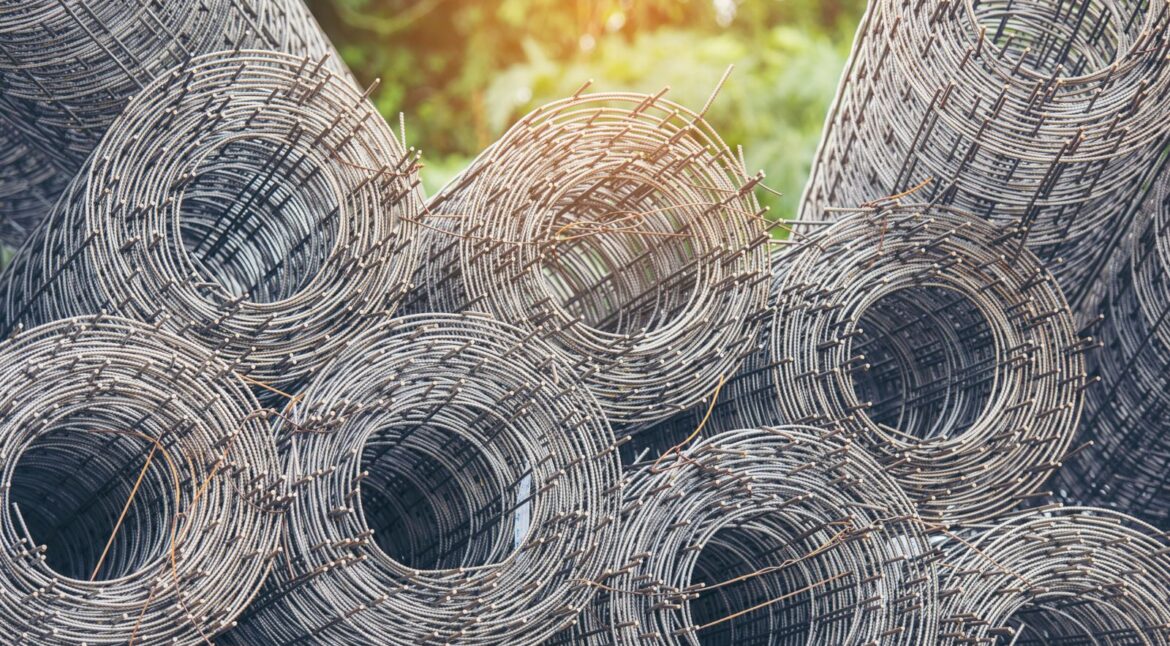
Wire mesh and fencing: Welded wire mesh, hexagonal mesh (chicken wire), and woven fence panels are almost universally made from low carbon galvanized wire. The wire’s formability allows it to be shaped into mesh panels without cracking at the welds or joints.
Agricultural applications: From vineyard trellising and crop support systems to livestock enclosures and orchard netting, agriculture relies heavily on galvanized wire that can withstand outdoor exposure over multiple seasons without significant degradation.
Industrial packaging and bundling: Bale ties and wire used in waste recycling, paper baling, and industrial bundling operations are typically made from low carbon galvanized wire due to the combination of tensile strength and corrosion resistance.
Nail and fastener production: Low carbon wire rod is the primary raw material for nail manufacturing. When galvanized, the resulting nails are suitable for exterior timber applications where ordinary bright nails would corrode.
Handicrafts and DIY: At the other end of the spectrum, low carbon galvanized wire is sold in small coils to retailers for garden use, hobby craft, and light-duty binding applications.
The breadth of these applications means that demand for low carbon galvanized wire is consistently high across multiple sectors — which also means there are a lot of suppliers in the market, and quality varies considerably.
What to Expect from a Reliable Low Carbon Galvanized Wire Supplier
Finding a supplier that reliably delivers on specification requires more than comparing a price list. Here’s what experienced procurement teams look for:
Traceability and material certification. Every coil should be traceable back to a specific production lot. A quality supplier provides mill certificates or test reports that document the chemical composition of the steel, the wire diameter tolerances, tensile strength, and zinc coating weight. Without this documentation, there’s no way to verify that the wire you received meets the specification you ordered.
Consistent production capacity. A supplier that can fulfill a trial order of 5 tonnes may not be the right partner for a repeat order of 500 tonnes per month. Before committing to a supply relationship, it’s worth asking about production capacity, lead times under typical and peak-demand conditions, and what their order backlog looks like.
Diameter range and tensile options. Low carbon galvanized wire is produced in a wide range of diameters — typically from 0.20 mm up to 8.0 mm — and in different tempers (soft/annealed, medium, and hard). A supplier with broader manufacturing capability gives you more flexibility as your requirements change, rather than forcing you to manage multiple vendors for different specs.
Packaging options. Coil weight and packaging format matter more than they might seem. Wire supplied in small 25 kg coils is fine for distributors and retail, but industrial buyers often need coils of 500 kg, 800 kg, or 1,000 kg to minimize handling and reduce per-unit cost. Confirm that your supplier’s packaging options are compatible with your handling equipment and storage arrangements.
ISO certification and quality management. ISO 9001 certification doesn’t guarantee product quality on its own, but it’s a reasonable baseline indicator that a supplier has structured quality management processes in place. Beyond certification, ask about their in-process quality controls: how frequently they test coating weight, how they handle non-conformance, and what happens if a shipment doesn’t meet spec.
Export experience and logistics capability. If you’re sourcing internationally — and many buyers of low carbon galvanized wire do — experience with export documentation, customs requirements, and international shipping is essential. A supplier that regularly ships to multiple markets will be more reliable on lead times and less likely to cause delays due to documentation errors.
Common Sourcing Mistakes to Avoid
A few patterns tend to come up repeatedly when buyers run into problems with their galvanized wire supply:
Buying on price alone. It’s tempting, especially when wire seems like a commodity product. But a wire that fails to meet coating weight requirements, or that has diameter tolerances wider than specified, will cause downstream problems — whether that’s premature corrosion, difficulties in mesh weaving, or rejected material at a downstream production stage. The cost of fixing those problems typically exceeds whatever was saved on the purchase price.
Not specifying clearly. Vague orders lead to inconsistent deliveries. “Low carbon galvanized wire, 1.6 mm” is a starting point, not a specification. A complete spec should include: wire diameter and tolerance, tensile strength or temper, galvanizing method (hot-dip or electro), zinc coating class or weight, coil weight, and applicable standard (ASTM A641, BS EN 10244, or equivalent).
Skipping sample evaluation. For any new supplier relationship or significant volume commitment, requesting a sample for lab evaluation before committing to a full order is standard practice for experienced buyers. It’s not a sign of distrust — it’s due diligence, and any serious supplier will expect it.
Ignoring lead times in project planning. Wire may seem like an easily available commodity, but delivery times vary significantly based on specification, order volume, and supplier location. Building procurement into project timelines at the last minute is a recurring source of schedule pressure.
Questions to Ask a Potential Supplier
Before finalizing a sourcing decision, it’s worth running through a checklist with any new supplier:
- What steel grade do you use as your base material, and can you provide the chemical composition?
- What galvanizing process do you use — hot-dip, electro, or both?
- What zinc coating weights can you achieve, and to which standard?
- What diameter range do you manufacture, and what are your diameter tolerances?
- What tensile strengths or temper options are available?
- Can you provide mill certificates or test reports with each shipment?
- What are your standard coil weights and packaging formats?
- What is your typical lead time for this specification at the volumes we need?
- Do you have experience exporting to our market, and can you manage the required shipping documentation?
- What is your process if a delivery doesn’t meet the agreed specification?
A supplier who answers these questions clearly and confidently — without deflecting, over-promising, or giving vague answers — is a supplier worth taking seriously.
Final Thoughts
Low carbon galvanized wire is one of those products that looks straightforward until something goes wrong. The right supplier partnership makes the difference between a smooth, reliable supply chain and one that creates operational headaches across your downstream processes.
The factors that matter most — coating quality, dimensional consistency, material traceability, and responsive communication — aren’t always visible in a quote. Taking the time to evaluate suppliers properly, define specifications clearly, and build relationships with manufacturers who understand their product deeply is the kind of procurement practice that pays dividends over the long term.
If you’re evaluating suppliers right now, use the questions above as a starting framework. The answers will tell you more than any price list ever could.